

Outdoor Pavilion Construction in Hobart
Decking Hobart Specialist
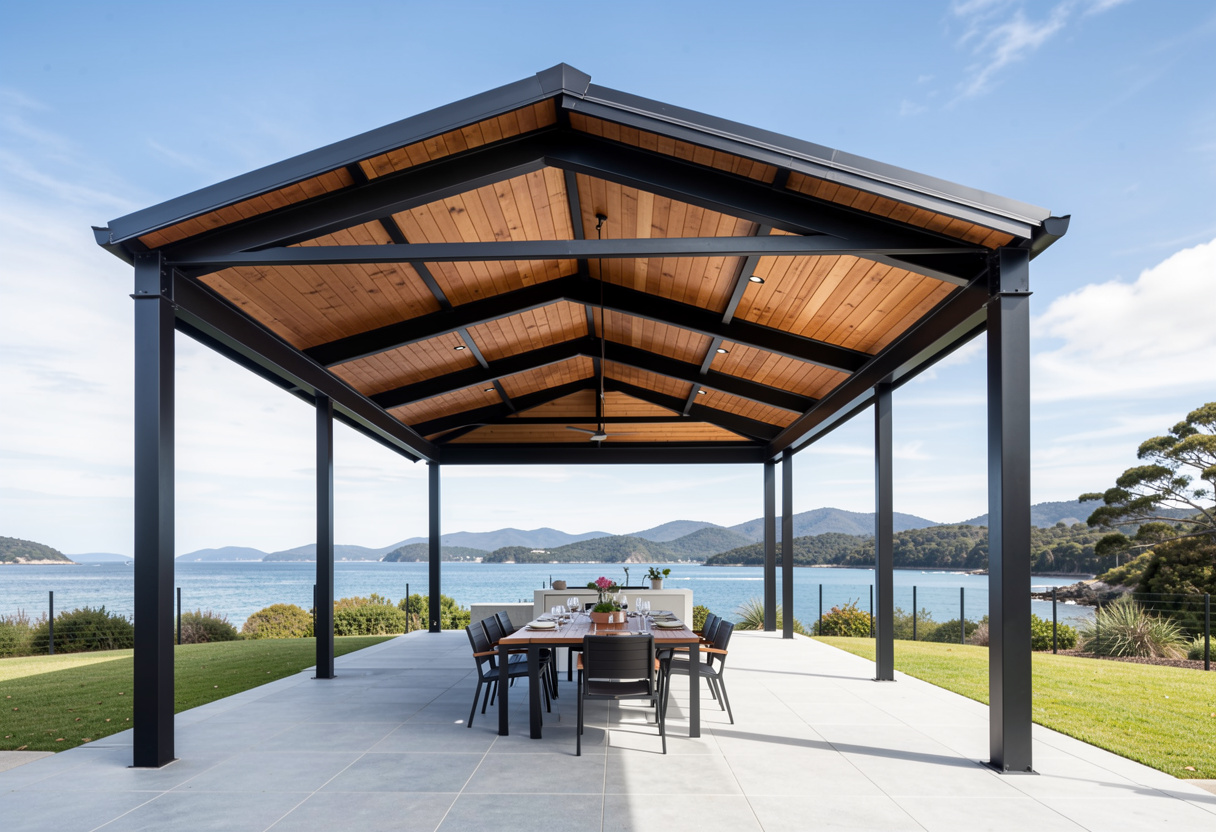
Professional Outdoor Pavilion Construction for Hobart Homes
There’s a moment that happens at pretty much every family gathering in Hobart – everyone’s squeezing into the one covered area because the weather’s turned, or the afternoon sun’s gotten too intense. You’ve got aunties shoulder-to-shoulder with teenagers, someone’s trying to keep the barbecue going while dodging the rain, and you’re thinking “there’s gotta be a better way to do this.”
That’s where proper outdoor pavilion construction comes in. We’re talking about the real deal here – substantial structures that can handle Hobart’s wind, keep your mob dry when the weather comes in off the mountain, and give you the kind of covered outdoor space that actually works for Tasmania’s climate. Not just a bigger deck with a roof slapped on top. A properly engineered pavilion that’s built to last, built to code, and built specifically for the conditions we get here in Hobart.
What Kind of Pavilions Do We Build?
Residential Pavilions are probably what most people think of first – these are your large-scale family entertaining spaces. We’re building outdoor living rooms here, structures big enough for Christmas lunch with the extended family, spaces where you can set up proper outdoor kitchens and still have room for everyone to spread out. The kind of pavilion where you’re not herding everyone into a cramped corner when the southerly comes through.
Commercial Pavilions are a different beast altogether. Cafés wanting alfresco areas that work year-round, wineries needing function spaces that make the most of their views, event venues that can’t afford to be weather-dependent. These builds need to handle bigger crowds, meet commercial building codes, and usually incorporate serious infrastructure – commercial kitchens, bar areas, permanent fixtures.
Community Pavilions serve parks, sports grounds, community centers. These structures need to be bombproof – they’re getting used hard by lots of different people, often with minimal supervision. Think cricket club pavilions, park shelters, community gathering spaces. Heavy-duty construction, vandal-resistant where needed, built to take a beating and keep going.
Pool Pavilions are becoming more popular – combining change rooms, outdoor showers, entertaining areas, and storage all in one structure. Proper weather protection right where you need it, with all the plumbing and electrical sorted. Makes your pool area actually usable through more of the year.

Construction Materials
Timber frame gives you that natural, traditional look that works beautifully with Hobart’s older homes and established gardens. We’re using properly treated hardwood or engineered timber that can handle Tasmania’s weather – this isn’t the pine framing you’d use inside. Timber frames can span decent distances, they look warm and inviting, and they age well when they’re built right.
Steel frame is what you need when you’re going for serious spans without internal posts. Steel doesn’t care about the distance – we can create completely open spaces that would be impossible with timber alone. It’s also the go-to for commercial builds where you need that extra strength and fire rating. Powder-coated steel holds up brilliantly in our climate.
Hybrid timber and steel is where we combine the benefits – steel beams doing the heavy structural lifting, timber used for the features you actually see and touch. You get the strength and spanning ability of steel with the warmth and character of timber. This is often the sweet spot for larger residential pavilions.
Decking Hobart Specialist
Roofing Options
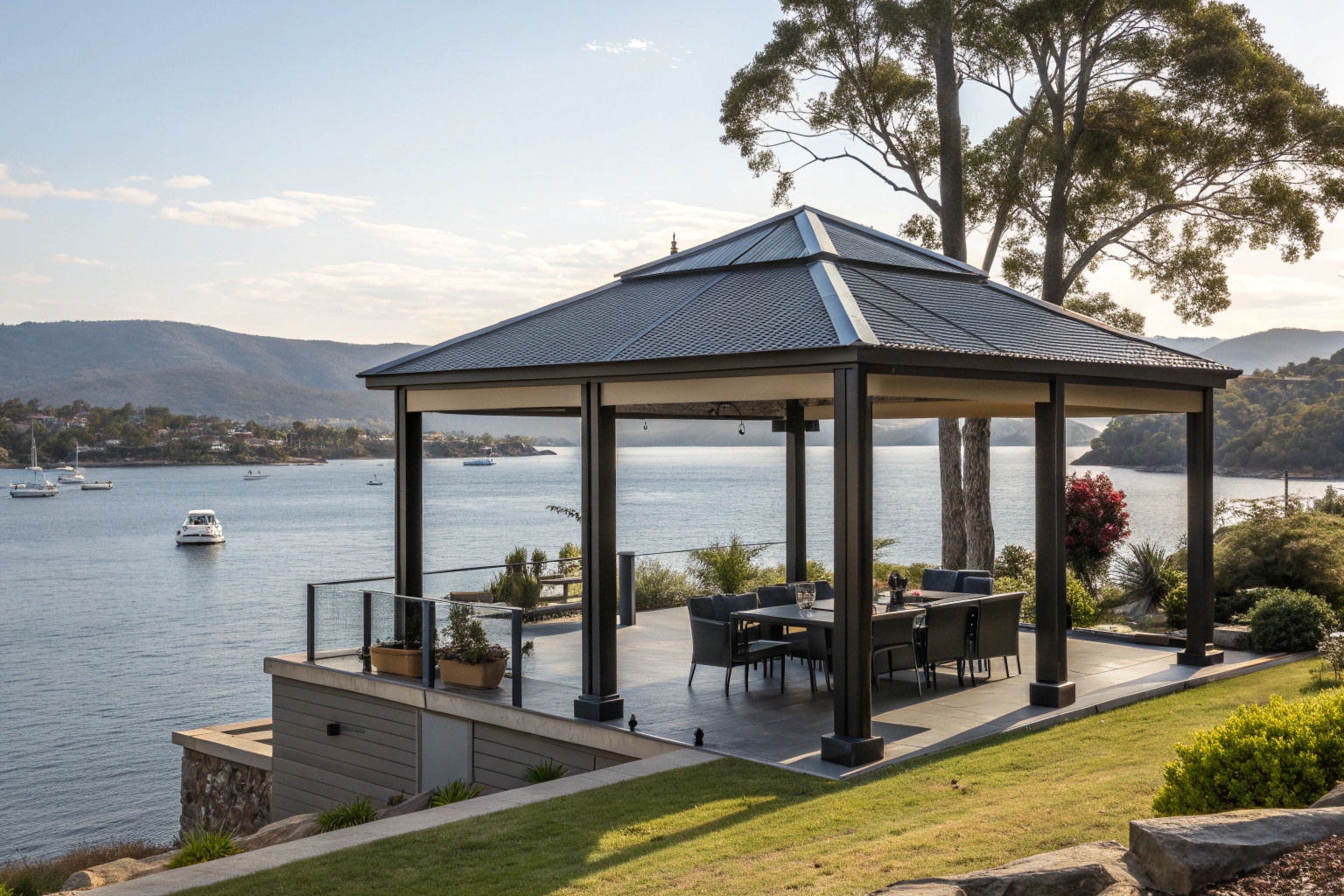
Colorbond roofing is the workhorse for Hobart conditions. Full weather protection, proven performance in our wind, available in colors that work with pretty much any home. It’s what we recommend for most residential and commercial pavilions because it just works – no drama, no maintenance headaches.
Insulated panel roofing makes sense when you’re creating a space that’s going to be used year-round and you want some thermal comfort. These panels keep the heat in during winter and the space cooler in summer.
Timber ceiling linings transform the feel of the space – you’re looking up at beautiful timber instead of the underside of the roof. Creates a much more refined, finished look. We often combine this with insulated roofing for the best of both worlds.
Exposed rafter systems can be an architectural feature in themselves when they’re done properly. Chunky timber beams, visible joinery, the structure becoming part of the design.
What You Can Include
These aren’t just roof and posts situations. Proper pavilion construction means you can integrate outdoor kitchens with everything from basic barbecue setups to full commercial-grade cooking areas, built-in bars with plumbing and refrigeration, fixed seating that’s part of the structure itself.
We regularly install heating systems – either ceiling-mounted gas heaters or electric radiant panels – so the pavilion’s usable even on those cold Hobart nights.
Lighting gets planned into the design from the start, and if you need storage areas for outdoor furniture or equipment, we can build those in as well.
The key thing with all these features is they’re engineered into the pavilion from day one, not added as afterthoughts. That means proper structural support, weatherproofing where it matters, and everything built to code.


Our Pavilion Construction Service
Our pavilion construction service in Hobart is a complete end-to-end solution, starting with custom architectural design tailored to your site, layout, and lifestyle needs. Every pavilion is structurally engineered to meet Tasmanian building codes and local wind-load requirements, with stamped drawings and full documentation provided for council approval. We carefully select timber and steel materials suited to Hobart’s unique climate, including wet winters, coastal air, occasional frost, and strong UV exposure, ensuring long-term durability and performance.
Our experienced builders and qualified tradespeople handle all construction, including structural framing, roofing, weatherproofing, and finishing details. If your pavilion includes electrical or plumbing features—such as lighting, power points, or an outdoor kitchen—we coordinate licensed electricians and plumbers to ensure everything is installed safely and certified. We also manage council permits, inspections, and compliance requirements, so you don’t have to deal with the paperwork.
From footing depth and beam sizing to drainage and insulation, every detail is built to last. With full insurance coverage in place, you can have complete peace of mind knowing your Hobart pavilion is professionally designed, expertly built, and fully compliant from day one.
FAQs About Pavilion Construction in Hobart
You’re looking at anywhere from $45,000 for a basic residential pavilion up to $150,000+ for larger commercial-grade structures with all the bells and whistles. The big cost drivers are size, materials (timber vs steel framing), roofing type, and what features you’re building in – outdoor kitchens and bars add serious money. Hobart costs run a bit higher than mainland due to freight charges on materials and our smaller contractor pool, but you’re also getting builds that are properly engineered for our specific wind and weather conditions
Council approval alone takes 6-8 weeks in Hobart, then you’re looking at 4-8 weeks for the actual construction depending on size and complexity. Weather plays a role here – we can’t pour footings in freezing conditions, and there’s days where the wind’s too strong to safely work on roofing. Best approach is starting the approval process in late winter so construction can happen through spring and summer when conditions are more predictable.
Sometimes yes, sometimes no – depends entirely on whether your existing deck’s structure can handle the additional loads. Most residential decks aren’t engineered to support a roof structure on top, so we usually end up building the pavilion with independent footings that sit alongside or around the existing deck. If your deck’s already there and you want it incorporated, we assess the framing during quoting to see what’s actually possible without compromising safety
A pavilion has a solid, weatherproof roof – you’re getting full protection from Hobart’s rain and wind. A pergola has an open roof structure with beams and slats that provide shade but not weather protection, though you can add shade cloth or roofing later. For Hobart’s climate, pavilions make more sense if you want year-round usable space, while pergolas work better as decorative garden features or for creating dappled shade over outdoor dining areas during summer.
Pretty much yes – once you’re building a substantial roofed structure, council wants to see it. There’s minor exemptions for very small garden sheds under certain square meterage, but anything you’d actually call a pavilion triggers building approval requirements. The structural engineering, the footings, the roof loads – council needs to verify it’s all safe and compliant, which honestly makes sense given how much wind we get here
We schedule the critical stages – footings, structural framing, roofing – for when the forecast’s decent, knowing we’ll still cop the occasional weather delay. The concrete work needs dry conditions and temperatures above 5 degrees, structural steel can go up in most weather, but roofing’s the trickiest because wind makes it dangerous. We build weather contingency into every timeline because trying to rush pavilion construction in poor conditions is how mistakes happen, and these structures need to be built right

Building Pavilions in Hobart – What You Need to Know
Building a pavilion in Hobart is a significant construction project that requires proper engineering, approvals, and professional planning. Structural certification is mandatory, with an engineer signing off on the design to ensure the pavilion is safe, compliant, and built to handle real-world conditions. Wind-load calculations are especially important in Hobart, as different suburbs, elevations, and exposures can dramatically affect how much wind a structure must withstand.
Council approval is required for pavilions of this size, and the application process typically takes around 6–8 weeks. All projects must comply with the Australian Building Code, covering structural integrity, safety requirements, accessibility (especially for commercial spaces), and energy efficiency where applicable. Site access and logistics are also assessed early in the process, as transporting large beams, steel posts, and roofing materials can be challenging in heritage areas or narrow streets.
Commercial pavilion projects involve additional regulatory requirements, including fire safety systems, disabled access, commercial kitchen approvals, and licensing considerations for bars or event spaces. While outdoor pavilion construction in Hobart is not a simple DIY job, a professionally engineered and approved structure can transform your property, providing a durable, compliant, and weather-resistant outdoor space that adds long-term value for decades to come.
